
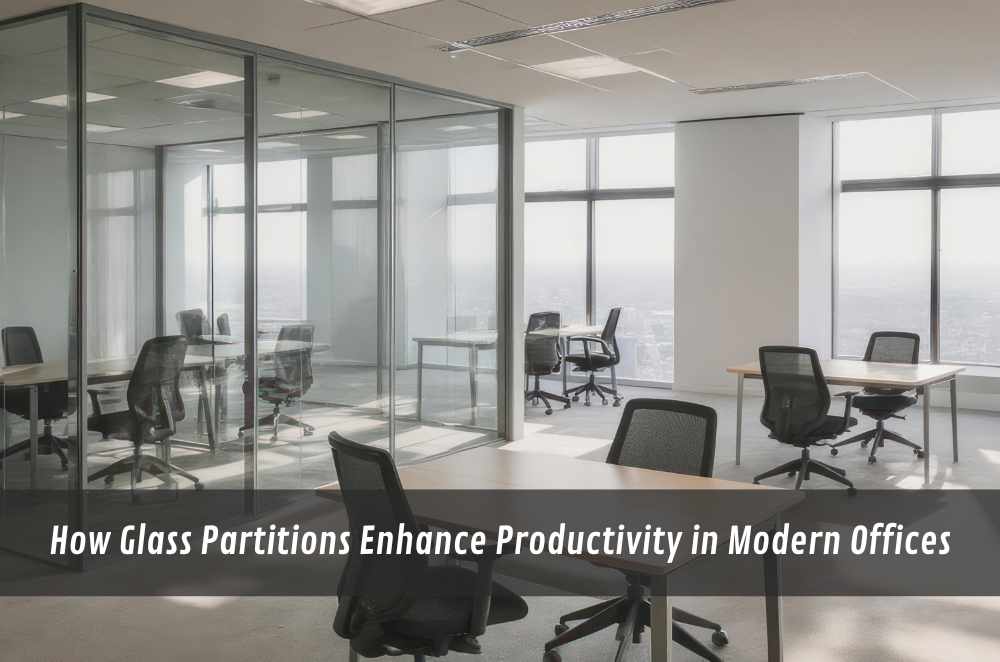
Most offices are chasing the same balance: openness for teamwork, enough hush for deep work, and a layout that won't date next year. The move toward modern office glass partitions answers that brief without fuss. Clear panes carve out rooms while keeping the place bright, so meetings feel connected to the floor rather than shut away. Light bounces, reflections soften edges, and sightlines help people navigate instinctively. You get privacy when you need it—film, framing, and acoustic options—but not the boxy vibe of plaster walls. In short, glass gives structure, not bulk, and lets us reshape spaces as quickly as the work itself shifts without drama or costly rebuilds.
How do glass partitions improve office productivity?
Glass partitions improve office productivity by keeping people visually connected while taming stray noise. The result is faster collaboration with enough headspace for focused tasks.
They calm the floor without killing energy. Daylight carries across zones, eye contact is easy, and movement stays readable, so teams coordinate on the fly. Add switchable film or seals and the same nook flips to private in seconds. It’s practical, not precious—good ergonomics with lighter materials and fewer blind corners.
Boost daylight and reduce eye strain
Maintain line-of-sight for quicker teamwork
Create quiet pockets without full walls
Reconfigure rooms in minutes, not days
We rate clever glass wall dividers for crisp layouts that keep conversations flowing while focus stays protected.
Why are adaptable spaces key to workplace design?
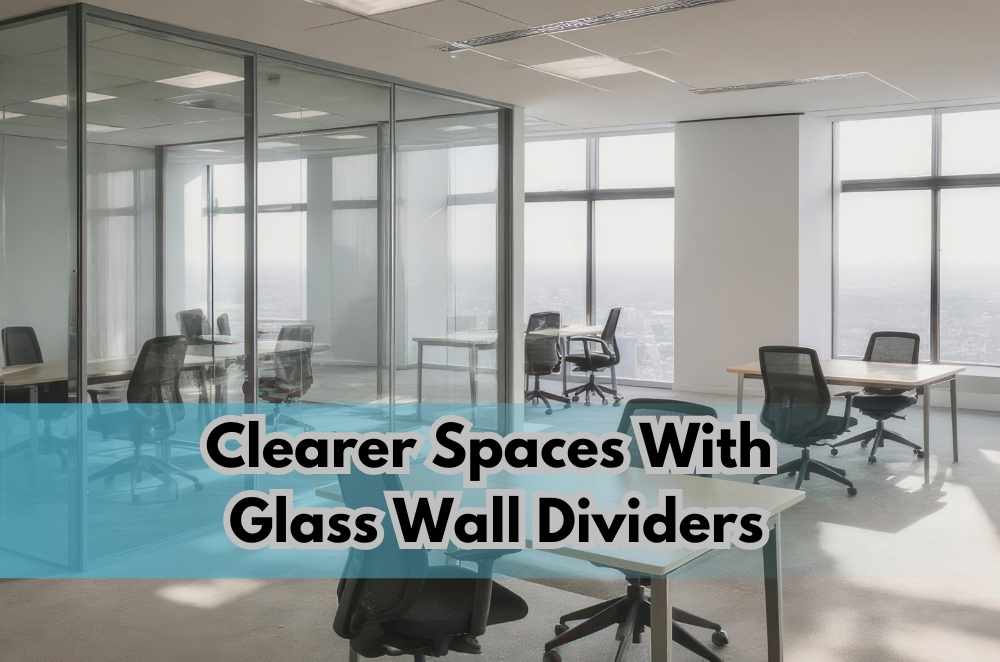
Adaptable spaces are key because work changes week to week. Hybrid patterns, shifting squads, and new projects demand rooms that flip purpose without renovation. Glass systems make that pivot simple, creating clearer spaces with glass wall dividers that adjust to changing needs.
Shift from meeting to focus within minutes
Scale rooms with sliding or demountable panes
Signal privacy levels using film or framing
Slide a panel, and a huddle spot becomes a client room; open it, and you’ve got an event run. No mess, no downtime, and no arguing with the fit-out plan from last year. People recognise the cues — transparent edges say “welcome”, subtle frosting says “heads down.”
What makes glass partitions a sustainable choice?
Glass partitions are sustainable because they stretch the value of light and space. More daylight means fewer artificial lamps and calmer, healthier floors.
They’re also modular, so the kit moves with you. Panels get resized, frames reused, hardware swapped—less skip bin, more circular fit-out. Compared with heavy walls, transport and material loads drop, and maintenance becomes a cloth and a squeegee rather than a patch and paint job. Over time, that’s real savings: energy, materials, and headaches.
Conclusion
Modern workspaces are more than a collection of desks; they’re living systems designed around light, flexibility, and human connection. Glass partitions embody that philosophy, blending function with understated beauty. They help businesses design for now and the future, adapting to changing ways of working while maintaining a timeless look.
As the rise of glass wall dividers continues across contemporary offices, it’s clear this isn’t a passing trend. It’s a reflection of how we now define productive, modern workspaces — open, flexible, and filled with light.





Write a comment ...