
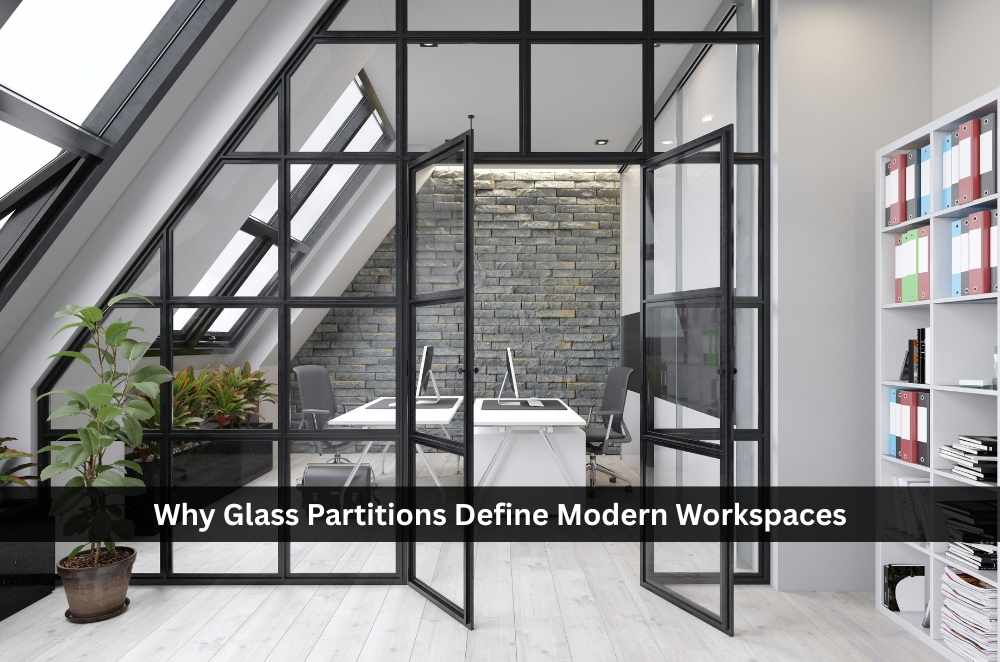
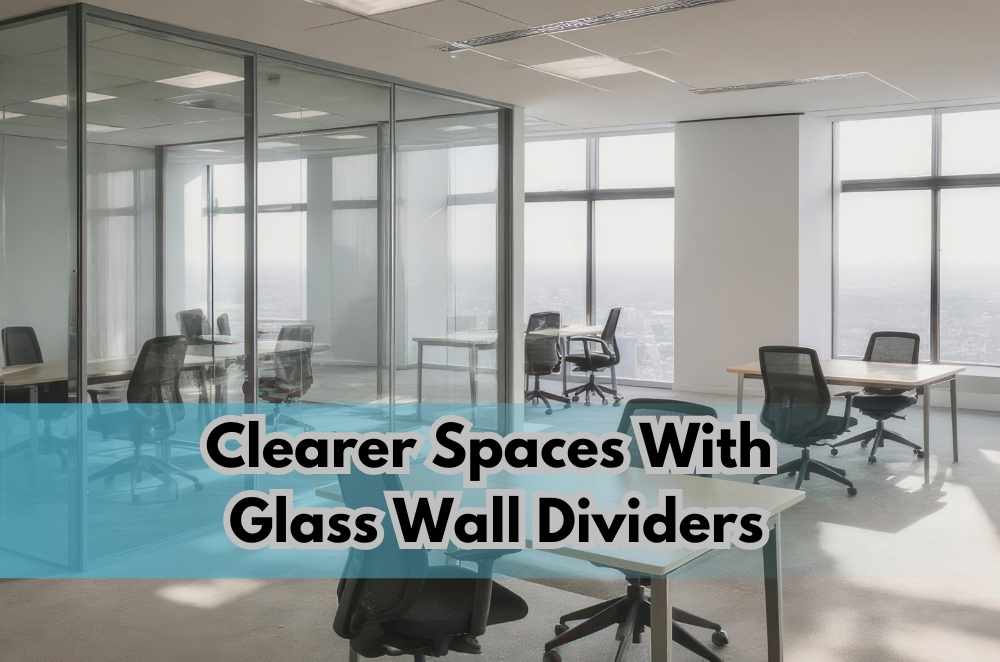
Anyone who’s worked in a busy open-plan office knows how quickly noise and movement can break your focus. That’s partly why so many workplaces are rethinking their layouts and using glass partition walls for office as a way to regain some structure without shutting people away. Glass lets teams move between quieter areas, casual discussions and more formal meeting spaces while still keeping the office open and light-filled.
That shift isn’t about chasing trends. When people can see where to go for focused work, casual discussion or private conversations, day-to-day tasks feel easier and less draining. Over time, that sort of clarity has a real impact on how teams communicate, manage interruptions and actually get through their to-do lists.
Why layout and visibility matter for productivity
The way an office is laid out quietly shapes how people behave. When pathways, work zones and meeting spaces are obvious, staff don’t spend energy wondering where to go or whether they’re disturbing someone. Glass partitions help make those patterns visible without closing people off from each other.
In practice, a good layout can:
Reduce the number of casual interruptions around focused workstations
Make it easier to spot a free room or quiet corner
Give teams clearer “home bases” for collaboration
Support natural supervision without hovering
I’ve seen this play out in a professional services office where everything originally centred on one noisy open area. Once glass partitions defined a few smaller focus rooms and team zones, you could actually see how the workday changed. People drifted to quieter spaces for deep work, then back to open areas for quick conversations, instead of trying to do everything at one desk.
A transparent layout also helps new staff settle in faster. When they can literally see how the space works, they don’t need constant directions to find a spot for calls, quick chats or project sessions. That sense of orientation is a small but steady win for everyone’s mental load.
Managing noise and focus with glass partitions
Noise tends to creep up on people in a busy office. It’s not just the obvious stuff like meetings spilling into open areas — it’s the little things layered together: half-finished conversations near a desk, someone pacing on a call, a chair scraping across the floor. After a while, it builds into this low, constant buzz that’s hard to tune out. That’s usually when glass partitions start to make sense, not as a grand design gesture but simply as a way to give the room some boundaries without shutting everyone off.
They help by shaping the flow of sound and movement:
Putting a bit of distance between talk-heavy zones and quieter desks
Keeping private conversations contained without making rooms feel boxed in
Giving people somewhere small and obvious to duck into for a call
Making it easier to tell at a glance whether a space is free
One office I spent time in really drove this home. The team had grown faster than the layout could cope with, and people ended up holding quick meetings in the kitchen because it was the only spot that felt even remotely separate. It wasn’t ideal — too much noise, too much traffic. When a few glass-fronted rooms were added near the main work area, the shift was almost immediate. People naturally drifted into those spaces for calls and short chats, and the rest of the floor suddenly felt calmer, like someone had finally turned the volume down.
When workplaces are thinking more broadly about how they upgrade their spaces, glass partitions can sit comfortably inside larger plans for renovations for the offices. Instead of relying on heavy solid walls that block daylight and airflow, glass can work alongside other design decisions that prioritise comfort, natural light and long-term performance.
Design choices that support different ways of working
No two teams work in exactly the same way, which is why glass partitions are rarely a one-size solution. The details – framed or frameless, clear or frosted, sliding or hinged doors – shape how people move, talk and settle into their day.
Some of the most practical decisions involve:
Choosing where full-height glass makes sense and where partial glazing is enough
Deciding which rooms need extra acoustic performance
Positioning doors so they don’t clash with circulation paths
Planning for power, data and screens around glass walls
During one office refresh I was part of, the team wanted spaces that felt open but still offered pockets of quiet when deadlines crept up. That balance landed nicely once we introduced a few areas defined by frameless office partitions, which gave the rooms a light, unbroken feel without making anyone feel exposed.
Glass partitions beyond the office
Although the focus here is on commercial workplaces, many of the same ideas are showing up in home and flexible work environments. The line between “office” and “elsewhere” has blurred, and people are looking for ways to create focus without shutting themselves away entirely.
You’ll often see similar principles used to:
Carve out a study or work nook inside a larger room
Separate a meeting area without losing connection to family spaces
Bring more daylight into internal rooms or corridors
Maintain clear views while still softening noise and movement
Those choices often resemble how teams use focus rooms at work. It reminds me of setups where glass room partitions help create a quieter pocket without making the rest of the space feel overly segmented.
Final thoughts on productivity and glass
Glass partitions won’t magically sort out every problem in a workplace, and they’re not meant to. What they can do is nudge a space in the right direction by giving people a few more options for how they move through their day. Some work is better done with others close by; some needs a bit of breathing room. A layout that acknowledges that mix tends to settle people, even if they don’t notice it happening.
When the office isn’t fighting against the way people naturally work — when conversations don’t spill across the whole room, when the light isn’t trapped in one corner, when you can see at a glance where to step into a quieter spot — the whole place feels easier to navigate.






Write a comment ...